Everything Must Go (work-in-progress)
Working Title: Everything Must Go
Logline:
Through antique glass, chemical residue, and digital traces, this film reflects on the loss of a loved one and how meaning lingers in what we keep, discard, or inherit. A meditation on grief, permanence, and what refuses to fade.
Synopsis/Treatment:
This essayistic documentary examines how grief, material culture, and shifting systems of value intersect. Moving between a historic cemetery outside Milwaukee, the history of American Brilliant Cut Glass, and contemporary glass recycling, the film reflects on the loss of a loved one while exploring what we hold onto, what we discard, and what endures despite a culture centered on disposability.
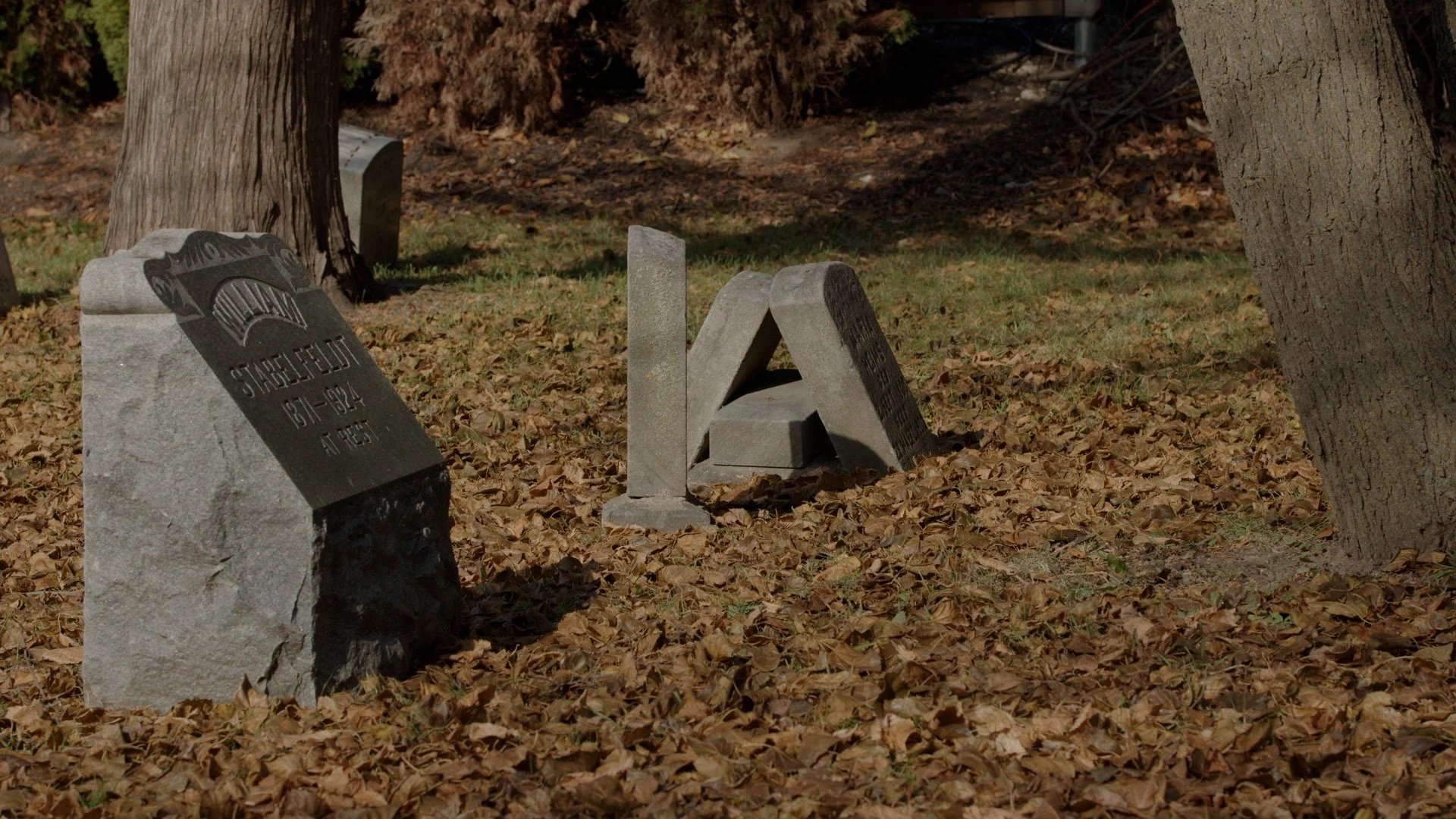
The project begins in a cemetery established during a cholera epidemic in the early twentieth century and now surrounded by commercial and residential development. Far from neglected, it is quietly encircled by expansion, a landscape where remembrance persists within the pressures of progress. The site becomes a metaphor for how histories, both personal and collective, remain embedded within modern spaces that attempt to build over them.
The film then turns to American Brilliant Cut Glass, produced between 1876 and 1917 and representing one of the last handmade artisanal industries in the United States. Once prized for its craftsmanship and symbolic of refinement and aspiration, these objects now appear in thrift stores for only a few dollars. Their diminished market value reflects broader cultural shifts from longevity to convenience, even as the material itself persists with a brilliance that resists obsolescence.
Through narration, archival imagery, and visual collage, the film situates these material histories within the rise of single-use culture and the expanding reliance on plastics. It examines how convenience redefined care, durability, and permanence, replacing the handmade with the disposable and reshaping our relationship to matter. The final movement turns inward, confronting the death of my ex-husband and the residues of love, memory, and care that remain. Through layered sound, collage, and intimate voiceover, the film considers how grief transforms our attachment to objects and digital traces, how a fragment of glass or a saved password becomes a vessel for what endures.
Combining historical research, observational filmmaking, and essayistic reflection, this project investigates how value, matter, and memory persist within systems built to erase or replace them. In the end, the film suggests that the traces we leave, both material and affective, resist the linear logics of waste, enduring far beyond their anticipated lifespan and reshaping experience despite systems structured to forget them.